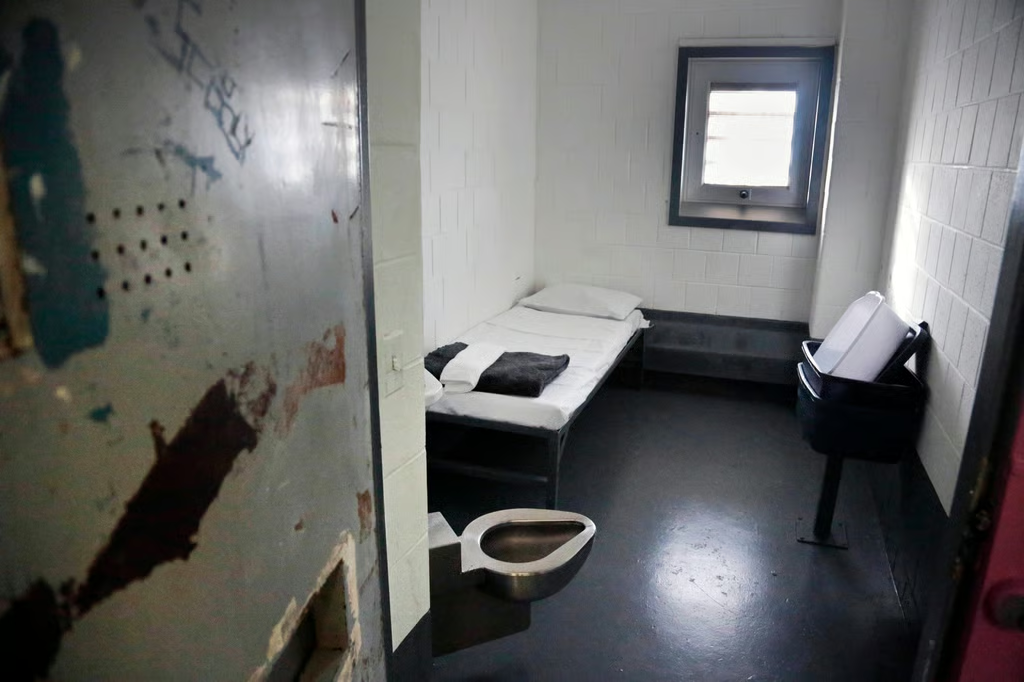
Việt Nam has formalized new protocols for capital punishment, setting a three-dose limit for lethal injections and awarding compensation for execution teams.
The Latest: On June 11, the government issued a new decree on carrying out death sentences by lethal injection, which takes effect on July 1, 2026.
The Details: Under the execution procedure, the person sentenced to death is fixed to a bed before being injected first with a drug that causes complete loss of consciousness, then a drug that paralyzes the motor system, and finally a drug that stops the heart.
A maximum of three doses may be used for each execution.
- If the prisoner has not died 10 minutes after a dose is injected, the next dose will be administered.
- If all three doses have been injected and the prisoner is still alive after another 10 minutes, the execution will be temporarily suspended.
Pre-execution: Before the execution, the death-row prisoner is allowed to eat and drink at a level equal to five times the holiday and Lunar New Year standard applied to people held in pretrial detention.
They are also allowed to write letters and record final messages for their family.
Compensation for Execution Officers: Each member of the execution team is entitled to compensation equal to three times the statutory base salary—around 7.5 million đồng ($285)—and 10 days of recuperation leave.
The Background: Việt Nam officially adopted lethal injection as a method of execution in 2011, replacing the firing squad used previously.
The full text of the decree was posted on the Government Information Facebook page.
- As of 4 p.m. on June 12, it had drawn more than 30,000 reactions and over 2,000 shares.
Why It Matters: Capital punishment remains a highly controversial penalty, especially in cases involving wrongful convictions.
- During the United Nations’ Universal Periodic Review cycles, many countries have recommended that Việt Nam restrict and move toward abolishing the death penalty.
- In June 2025, after the National Assembly passed amendments to the Penal Code, eight provisions were revised to remove the death penalty, leaving 10 offenses still punishable by death.
- In the draft amended Penal Code, the Ministry of Public Security proposed further reducing the number of death-eligible offenses from 10 to two. However, the proposal has faced opposition from several agencies.
Huỳnh Lam wrote this article in Vietnamese and published it in Luật Khoa Magazine on June 12, 2026. The Vietnamese Magazine has the copyrights to the English translation.